The Comprehensive Resource to Administrative Software for Trustees: Simplify Supervision and Improve Compliance
In today's complex regulatory environment, trustees encounter escalating challenges in oversight and compliance. Efficient administrative tools has emerged as an vital tool for improving workflow productivity. By centralizing records and automating processes, such software can greatly enhance oversight. However, selecting the right solution requires thorough evaluation of multiple elements. Comprehending these nuances is crucial for fiduciaries aiming to maximize their management practices and guarantee adherence to guidelines. What steps should they take next?

Why Management Software Is Essential for Trust Administrators
Effective management software plays an essential role for trustees tasked with overseeing intricate monetary and operational responsibilities. It simplifies workflows, guaranteeing that fiduciaries can handle various accounts and paperwork effectively. By consolidating data, software enables quick retrieval to essential information, which is crucial for informed decision-making and adherence to regulatory requirements.
Additionally, this tool decreases the danger of inaccuracies by automating everyday activities such as record submissions and record-keeping. With a well-organized online infrastructure, trustees can better track due dates, track financial performance, and facilitate communication among stakeholders. The capacity to deliver instantaneous analytics enhances openness and cultivates accountability.
Ultimately, administrative start here tools helps trustees navigate their duties with greater confidence and precision, enabling them to concentrate on strategic planning rather than operational tasks. This change not only improves operational efficiency but also strengthens the overall oversight structure within which trustees operate.
Core Traits of Effective Trustee Control Software
Trustees obtain major benefits from administrative systems equipped with important functionalities customized to their individual needs. A detailed dashboard allows for continuous monitoring of investments and regulatory standing, delivering transparency and accountability. Document management capabilities facilitate secure storage and convenient access of important records, reducing the risk of misplacement or loss. Additionally, mechanized report generation solutions expedite the preparation of financial summaries and compliance reports, freeing up hours and decreasing inaccuracies.
Collaboration features facilitate interaction among trustees and stakeholders, enhancing decision-making processes. Intuitive interfaces are essential, as they ensure that all trustees, regardless of technical proficiency, can easily operate the software. Adjustable alerts and notifications help trustees stay informed of key deadlines and compliance updates. Finally, robust security measures safeguard sensitive information, ensuring data integrity and confidentiality. Together, these essential features enhance the effectiveness of trustee management software, supporting the rigorous demands of governance and oversight.
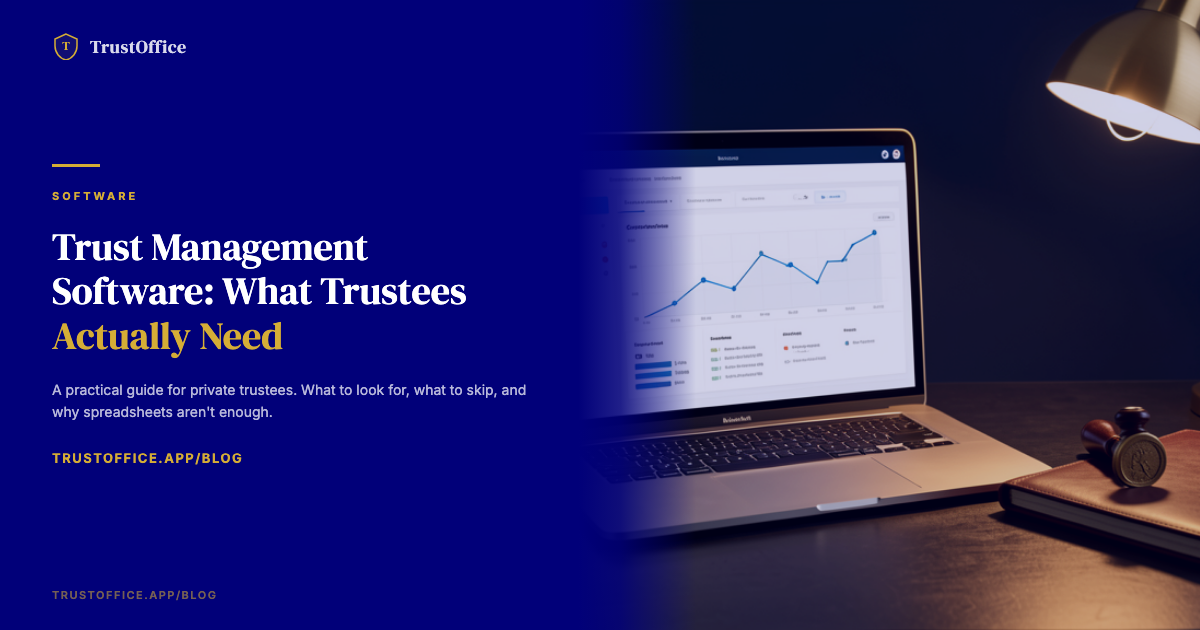
Essential Benefits of Fiduciary Management Software for Trustees
While the complexities of overseeing fiduciary duties can be difficult, implementing management software offers substantial benefits that streamline processes and enhance efficiency. One important advantage is better organization; software provides a centralized platform for documentation, making it easier for trustees to access critical data. Additionally, automated tools reduce manual tasks, allowing for timely updates and reduced error rates.
Strengthened compliance serves as another key benefit, as management software often includes embedded compliance frameworks and reporting systems, ensuring trustees meet legal obligations more productively. Furthermore, cooperation becomes smooth; various parties can obtain real-time data, promoting stronger dialogue and better decision-making.
In conclusion, data security is vital; established administrative solutions implements cutting-edge security measures and safeguards to protect confidential data. By capitalizing on these benefits, fiduciaries can concentrate on executing their legal obligations with greater assurance and supervision.
Examining Leading Administrative Software for Trustees
When examining trustee management platforms, it is necessary to evaluate the core features provided by different platforms. A review of cost frameworks can present perspective into the financial viability of each alternative. In addition, grasping user experience can show which software best fulfills the demands of trustees.
Key Characteristics Overview
An extensive analysis of management software for trustees uncovers several vital features that increase operational efficiency and decision-making. First, centralized document management permits easy access to critical records, ensuring compliance and transparency. Second, robust reporting tools facilitate data analysis, helping trustees to make informed decisions based on real-time metrics. Third, task management functionalities streamline workflows by allocating tasks and tracking progress. Additionally, secure communication channels support collaboration among trustees and stakeholders, reducing the risk of miscommunication. Integration capabilities with existing financial systems further enhance functionality, decreasing administrative burdens. Finally, user-friendly interfaces guarantee that all stakeholders, regardless of technical expertise, can use the software efficiently, promoting widespread adoption and effective oversight.
Compare cost structures
Administrative tools cost frameworks created for trustees vary considerably among vendors, demonstrating a variety of features and functionalities. Some platforms provide tiered pricing models, where users pay based on the quantity of trustees overseen or the intricacy of services employed. Others implement a subscription model, charging monthly or annual fees that may contain extra charges for advanced features or connections. A few providers offer one-time licensing fees, appealing to those looking for long-term investments without continuous fees. Additionally, some platforms may present flexible pricing tailored to specific organizational needs, creating increased adaptability. Overall, a comprehensive evaluation of these cost structures is crucial for fiduciaries to guarantee they choose platforms that corresponds with budgetary constraints while meeting their operational requirements.
Customer Interaction Understanding
Comparative examinations establish that tools boasting robust support networks, featuring tutorials and responsive customer service, markedly improve user satisfaction. Furthermore, user comments highlights the importance of mobile usability, enabling trustees to conduct duties from anywhere.
In essence, software that prioritizes user experience not only fosters compliance but also enhances overall productivity, making it an essential consideration for businesses wanting to perfect their governance strategies.
Instructions for Pick and Integrate Management Software
Picking and implementing management software calls for careful consideration of several key factors. First, trustees must define their concrete requirements, including functionalities for compliance tracking, report generation, and intuitive access. Reviewing different software platforms relative to these metrics helps make certain that the chosen solution aligns with company objectives.
Expense is another crucial consideration; trustees should analyze both starting expenditures and ongoing maintenance expenses. Additionally, user-friendliness is important, as staff must acclimate swiftly to new systems to minimize downtime.
It is also suggested to select software that integrates well with existing tools, which enhances functionality and efficiency.
After a suitable option is chosen, a comprehensive deployment strategy should be developed, including instructional programs for users and a clear timeline for launch. Ongoing assistance and feedback mechanisms are essential to resolve any issues quickly, ensuring the software successfully fulfills the organization's requirements over time.
Overcoming Challenges With Administrative Software
Even after a detailed selection and implementation process, institutions may still confront problems with enterprise applications. Standard difficulties include user resistance, inadequate training, and integration difficulties with incumbent systems. Employees may struggle to adapt to revised operations, leading to frustration and decreased productivity. Likewise, if training is insufficient, practitioners might not fully utilize the software's features, hampering its effectiveness.
Integration with older systems can pose a significant hurdle, as compatibility issues may arise, necessitating additional IT resources. Furthermore, data migration can be challenging, with risks of loss or corruption during the change.
To surmount these challenges, organizations should prioritize ongoing support and learning, ensuring users feel comfortable with the software. Consistent feedback channels can assist in recognizing recurring issues, allowing for timely modifications. By cultivating a culture of adaptability and delivering adequate support, organizations can strengthen the software's performance and achieve better oversight and compliance.
Future Developments in Operational Software for Trustees
As the terrain of administrative tools for trustees transforms, several important developments are appearing. The integration of AI technology promises to improve analytical capabilities, while heightened data security measures are growing critical in safeguarding confidential data. Additionally, the growth of cloud-based solutions offers greater availability and adaptability for trustees in managing their responsibilities.
Artificial Intelligence Adoption
The incorporation of AI technology in management software for trustees is poised to transform the way fiduciaries function. By automating routine tasks, AI enables trustees to focus on strategic decision-making and enhance operational efficiency. Predictive analytics can deliver insights into market movements, enabling better investment strategies and risk evaluations. Additionally, AI-driven tools can enhance compliance by tracking regulatory requirements and flagging possible problems before they arise. Natural language processing can improve correspondence by interpreting legal paperwork and producing documentation, thereby decreasing administrative workload. As these technologies advance, trustees will gain from improved precision and reduced human error, opening the door to a more proactive and agile approach to trust management in an increasingly intricate regulatory landscape.
Advanced Data Protection
Managing the challenges of trust management demands increased focus to data security, as cyber threats persistently change. Trustees are progressively understanding that strong protective systems are vital to protect private data and ensure compliance with regulatory standards. Modern encryption approaches, layered authentication methods, and continuous compliance assessments are becoming typical elements in management software. These improvements not only secure information but also create greater trust among stakeholders. Furthermore, software developers are committing resources to machine learning algorithms that can identify anomalous activity and potential breaches in real-time. Consequently, trustees can leverage defensive protective tactics that respond to emerging dangers, ultimately establishing a more secure environment for managing trust assets and information.
Cloud-Based Solutions Advancement
Cloud-based platforms are transforming trust management by offering remarkable flexibility and availability. These systems enable trustees to access essential information anytime, anywhere, enabling immediate teamwork among stakeholders. As more organizations implement cloud solutions, the trend is projected to persist, motivated by the requirement for streamlined information handling and optimized processes. Improved integration capabilities with existing tools also support improved workflows and communication. Furthermore, developments in machine learning and automation within cloud infrastructures promise to enhance analytical capabilities and compliance tracking. By adopting these advancements, trustees can better navigate challenges and guarantee adherence to compliance standards, positioning themselves for long-term growth in an rapidly evolving landscape.
Frequently Asked Questions
What Is the Average Price of Trust Management Software?
Trustee oversight software usually ranges from $50 to $500 per month, determined by features and user count. Some companies might offer graduated pricing options or single fees for specific functionalities or services.
Does Instruction Need to be Done for Utilizing Management Software?
Training is typically critical for working with management software, as it guarantees users recognize the system's features and functionalities. Expert training optimizes performance, prevents mistakes, and ultimately supports better standards and governance in trustee management.
Will Management Software Sync With Your Systems?
Yes, management software can work alongside existing systems. Many providers deliver APIs and adaptable options that allow seamless connections, boosting information reliability and workflow efficiency, in the end benefiting comprehensive company functioning and decision-making processes.
What Support Options Are Provided for Customers?
Users typically have access to multiple support options, including online tutorials, customer service hotlines, email assistance, and community forums. These tools are designed to answer questions and enhance the overall user experience with the software.
Are There Mobile Apps for Trustee Management Platform?
Yes, many trustee management software solutions deliver mobile platforms, permitting users to handle assignments, obtain documents, and engage effectively while on the go, improving their productivity and promptness in supervising trustee responsibilities.